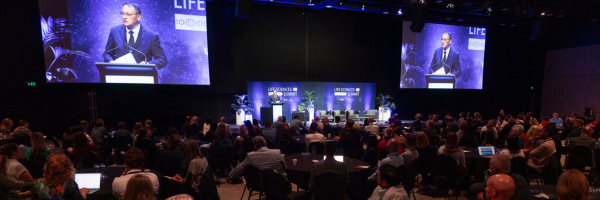
The Life Sciences Summit 2026 brought together New Zealand’s life sciences community for two energising days of insight, challenge, and connection – uniting researchers, founders, investors, industry leaders, policymakers, and partners around a shared goal: turning great science into real‑world impact.
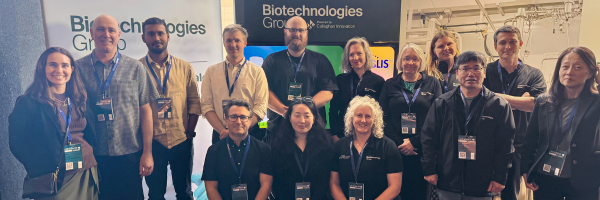
The Summit began with the Touchdown Tour on Monday 9 March, offering delegates a behind‑the‑scenes look at Wellington’s life sciences ecosystem. The guided tour included visits to Te Kāuru – Ferrier Research Institute – Synthetic & analytical chemistry and Biotechnologies Group labs, Malaghan Institute of Medical Research (Victoria University), and Te Kāuru – Ferrier Research Institute – Synthetic and Chemical Biology Lab (Professor Emily Parker), showcasing strengths across synthetic chemistry, process engineering, fermentation, immunology, and CAR‑T cell therapy. The day concluded with a relaxed networking event at Creative HQ, setting the tone for collaboration and connection.
Day One: Setting the Direction
Day One focused on the systems that enable life sciences to thrive – policy, capital, infrastructure, and global positioning. A key insight was that New Zealand’s science base is strong, but fragmentation across funding, regulation, and commercial pathways continues to slow impact. Speakers emphasised the need for better alignment across government, research, and industry to support scale.
Discussions reinforced that advanced technologies are only powerful when paired with execution capability. Whether in biotech, health, or agritech, panellists highlighted the importance of early regulatory thinking, infrastructure investment, and long‑term planning to avoid bottlenecks later.
The day concluded with networking and the BioTechNZ 2026 Awards, celebrating excellence across the sector:
- BioOra for establishing New Zealand’s first local CAR‑T manufacturing capability
- ADInstruments NZ Ltd for globally adopted physiological telemetry technology
- MACSO Technologies for AI‑enabled early detection of livestock respiratory disease
- Richard Furneaux, inducted into the BioTechNZ Hall of Fame, for more than four decades of pioneering impact in applied organic chemistry and synthetic biology
The awards underscored a clear message: impact happens when science meets perseverance, partnership, and scale.
Day Two: From Ideas to Execution
Day Two shifted firmly into how innovation is delivered in practice, with workshop‑style sessions across human and animal health, environment, manufacturing, biosecurity, and advanced technologies.
Keynotes from Andrew Pask (Colossal Biosciences) and Associate Professor Dr Heather Hendrickson (University of Canterbury) demonstrated how frontier science – de‑extinction, conservation genomics, and microbial evolution – is already producing practical tools for biodiversity protection, sustainability, and biocontrol.
Across masterclasses and panels, several consistent outtakes emerged:
- Execution is the hard part – innovation is abundant, but success depends on regulatory readiness, manufacturing capability, and real‑world integration
- Biosecurity is a strategic economic priority, requiring proactive science‑led investment rather than reactive response
- AI and quantum technologies are no longer theoretical – they are already improving decision‑making, productivity, and research across sectors
- Data quality, trust, and social licence matter as much as technology, particularly in health, agriculture, and public systems
Sessions on CAR‑T cell therapy, animal health, manufacturing quality, sustainability, scaling companies in Aotearoa, and applied AI reinforced that New Zealand’s advantage lies in applying advanced tools with purpose, responsibility, and speed.
A Shared Takeaway
Across both days, one message was clear: New Zealand has world‑class science, talent, and values – impact now depends on alignment, execution, and collaboration. The Life Sciences Summit 2026 reinforced that Aotearoa can lead globally by being agile, connected, and confident in scaling what works.
Thank you to our speakers, panellists, sponsors, award recipients, and attendees for making this Summit a success. The conversations don’t end here – they’re just getting started.