February 23, 2026

The Recipe For Taking New Zealand Biotech To The World

Ahead of his quickfire talk and masterclass roundtable at the Life Sciences Summit, Dr Paul Rose, Group Leader of the Biotechnologies Group at Callaghan Innovation, shares his perspective on what it takes to build enduring life sciences businesses in Aotearoa and how New Zealand can better support companies to seed, grow and scale.

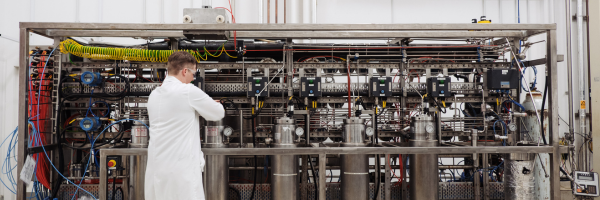
Pictured above: the Biotechnologies Group pilot scale supercritical fluid extraction plant, which extracts hard-to-reach bioactives from natural resources; this varies from marine oils to plant extracts, to make high-value products.

As biomanufacturing advances at pace, Kiwi innovators such as Alpha Group, Ārepa and Kabocha Innovations are developing novel, high-value products with global potential. The opportunities are significant. The challenge lies in turning that innovation into sustained commercial success in a country shaped by the economics of scale, a small domestic market and distance from major world markets.

“The science coming out of New Zealand is world class,” says Paul Rose, Group Leader of the Biotechnologies Group. “The bigger question is how consistently we turn that science into companies that scale and stay here in New Zealand.”

If building a life sciences sector were a recipe, the ingredients would not be the limiting factor. The method would be.

Know Who You Are Cooking For

In any recipe, you need to know who you are serving.

For most New Zealand life sciences companies, that audience sits offshore. It may not even be the end consumer – it could be a global brand, manufacturer, distributor or regulator.

“That global lens has to shape decisions early,” Paul says. “In an onshore market of our size, export thinking cannot come after proof-of-concept. It needs to inform it.”

Build Scale Into The Method

“One of the most common inflection points for biotech companies is the transition from proof-of-concept to production,” Paul says.

Can the ingredient be produced at commercial volumes?
Can the process move from laboratory to pilot to manufacturing?
Is cost of goods viable at scale?

“We see incredible innovation at scale,” he explains. “The real test is whether it can be manufactured reliably, at volume, and at a price the market accepts.”

At the Biotechnologies Group, much of the work sits at the intersection of science and engineering – helping companies refine processes, scale fermentation, optimise extraction and analyse products with commercial pathways in mind.

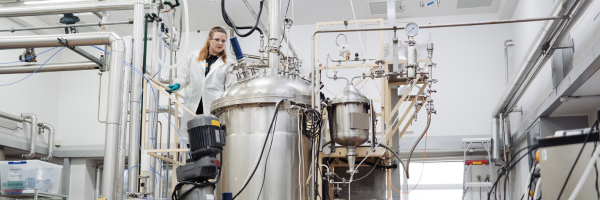
The Biotechnologies Group 1,000 Litre bioreactor, which enables start-ups and established businesses to scale their fermentation processes in New Zealand’s only bench-to-pilot scale facility.

“Scale isn’t something you bolt on at the end,” Paul says. “It needs to be designed in.”

Strengthen The Kitchen – And Look Beyond It

Infrastructure matters, but it does not remove every bottleneck.

New Zealand’s life sciences ecosystem continues to evolve, with increasing collaboration across research, engineering and commercial expertise. The planned integration of the Biotechnologies Group into the Bioeconomy Science Institute strengthens this environment by aligning complementary capabilities across food innovation, agriculture and biomanufacturing.

“When expertise and infrastructure are aligned, it reduces friction for companies,” Paul says.

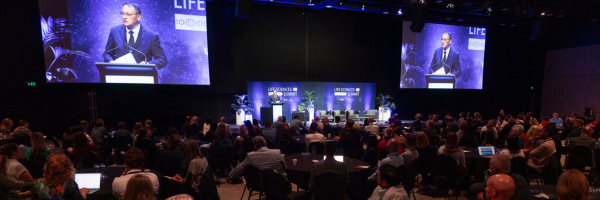
At the Life Sciences Summit, Paul and his team will facilitate a roundtable masterclass where industry leaders will explore what genuinely enables companies to scale – and where friction still exists. What has worked in the past? Where do businesses stall? And what needs to evolve?

The next phase of biotechnology growth depends on how intentionally we align science, engineering and commercial strategy, and how we shape the ecosystem that supports it.

That conversation continues at the Life Sciences Summit.

Beautiful mutants: why genetic variation matters for Aotearoa
18Feb

Beautiful mutants: why genetic variation matters for Aotearoa

We don’t often take time to think about the variety we see in nature and…

Tākina Convention & Exhibition Centre